
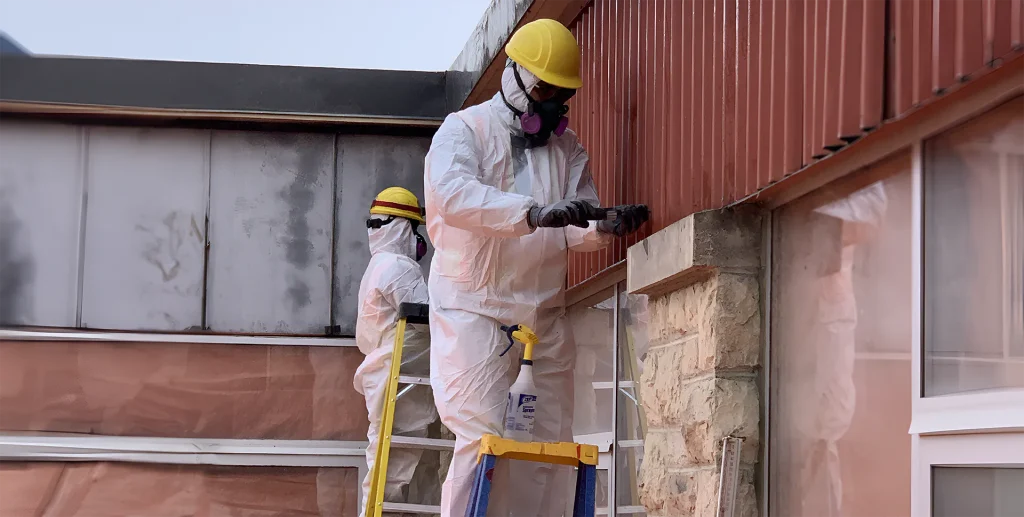
Asbestos removal is the most essential process that leads to a safe living or working environment. The inhalation of asbestos fibers can make the human body suffer from severe health issues such as lung cancer, asbestosis, and mesothelioma. Nowadays, there is a big number of old buildings where asbestos is secretly lying in the insulation, flooring, or roofing materials and is causing continuous danger to people. The purpose of the professional asbestos abatement services is to uncover, seal, and eliminate the hazardous fibers in a safe way. Through acknowledging the necessity of the process, the proprietors of the property can keep the people who are going to be in the place safe, align themselves with the rules and be the first to breathe in the healthy air. This guide with its detailed focus on these issues, methods, comparisons, and the likes of safe management has now become the resource for knowing about asbestos abatement.
Understanding Asbestos Abatement
Asbestos abatement is as well a major step apart from just taking off the dangerous materials. It, however, is a safe and systematized method to avoid people being in contact with the pollutants during and after removal.
Asbestos Abatement Significance
Health Protection: The exposure of people to dangerous minuscule fibers, which may lead to respiratory diseases is avoided through asbestos abatement.
Regulatory Compliance: The practice of asbestos abatement is in accordance with even the strictest local and federal safety standards.
Property Safety: The elimination of the cause of structural problems is the main benefit of abatement in a property.
Peace of Mind: The guarantee that buildings are safe and occupants can breathe clean air is given by the
- Common Sources of Asbestos
- Insulation for pipes
- Vinyl tiles for floors
- The texture of the ceiling and drywall
- Shingles and cement sheets for roofs
- Key Steps in Abatement
- Step Description Purpose
Inspection The process of identifying asbestos-containing materials materials Allows proper planning
Containment Area(s) closed off or sealed to prevent the spread of asbestos fibers Keeps the release of fibers from the air
Removal or Encapsulation Asbestos is removed or sealed so that it cannot be released safely handles the dangerous material
Disposal The act of removing the waste and taking it to a landfill that meets the requirements of the Environmental Protection Agency Helps to keep the environment clean and safe
Detailed Process of Asbestos Abatement
It takes the abatement operation a great measure of skill from a professional and the observance of very strict safety guidelines.
Initial Assessment
Forensic specialists make thorough inspections, collect samples of materials for laboratory testing. Results determine both the presence of asbestos and the range of its distribution.
Containment and Preparation
Negative air pressure systems, plastic sheeting, and warning signs are part the standard safety measures in the work areas to prevent exposure.
Removal vs. Encapsulation
Removal: Asbestos materials are forcibly taken out, thus, the situation is changed, e.g. by means of renovations or demolitions, where it is no longer safe to keep them.
Encapsulation: Covering asbestos with protective coatings, used nowadays when removal is not planned for the near future or as a temporary solution to ensure safety.
Final Clearance
Air quality inspections are conducted at the end of the entire process to ensure that the levels of fibers in the air are within the safe limits. It is at this point that the area is certified safe to be re-inhabited.
Comparing Asbestos Abatement Methods
On one hand, each of the different methods in abatement of asbestos risk represents various extents of safety as well as additional costs and some feasibility to be taken into account.
Trend: In nutshell, encasement is considered to be a low-cost and moderately effective method, while enclosure is more costly but makes the area more secure. Moreover, removal is the cleanest way to get maximum safety but is at the highest cost. Repair, on the other hand, a very simple method, can give just temporary solutions at the lowest possible expense.
The comparison given below shows how different methods revolve around the balance between affordability and long-term safety.
Practical tips for opting asbestos abatement services
The primary condition of choosing the appropriate service provider is to make sure safety and complete observance of regulations will be met.
Main deciding factors
Certification: Make sure the company is licensed to handle the abatement of asbestos.
Experience: Rule the providers by their accomplishments in the removal of hazardous materials.
Insurance: Verify the taking good care of the coverage which is sufficient for provincial and accidental purposes.
Open Pricing: Grab a quotation to really understand how much the service will cost besides the fixed price.
Step-by-step guide
Get a professional to check the situation.
Look over the plan of doing the work and safety steps involved.
Check to make sure that the work is being carried out in accordance with the rules and regulations.
Project progress can be monitored until the time of clearance testing.
Conclusion and Call-to-Action
Safe asbestos removal is the only way to keep people’s health intact, be up to regulations, and ensure the property’s security. The range of dangers including from breathing problems to expensive lawsuits makes the correct handling of the problem of asbestos something that should never be ignored. The proper answer really depends on the condition and the future use of the property whether it is by removal, encapsulation, or enclosure. Through hiring qualified experts, property owners can be confident that the risks of asbestos are handled in a safe and efficient manner.
If you want to plan an asbestos removal at your convenience, do not hesitate to contact a reputable environmental services provider for a reliable and compliant solution.
FAQs
Q1: What is asbestos abatement?
Asbestos abatement is a process in which asbestos-containing materials are removed, enclosed, or sealed in a way that no one comes into contact with the asbestos fibers.
Q2: Is complete removal always necessary?
It is not absolutely necessary to remove it in total. There are some cases where the effectiveness of the application of a protective coating or the closing of the area is enough. In the case of severely damaged materials or renovations, removal is obligatory.
Q3: How long does asbestos abatement take?
Time varies with the magnitude and range of the activity. The duration of small residential projects may be a few days while large commercial ones may last for weeks.
Q4: Can I remove asbestos myself?
Definitely No. The removal of DIY Asbestos can be a major cause of health and legal problems. Professionals ensure safety compliance and disposal through the proper execution of abatement.
Q5: How much does asbestos abatement cost?
The costs are directly proportional to the size of the area, the method chosen, and the type of material used. Encapsulation is usually less expensive, while total removal is more costly.
